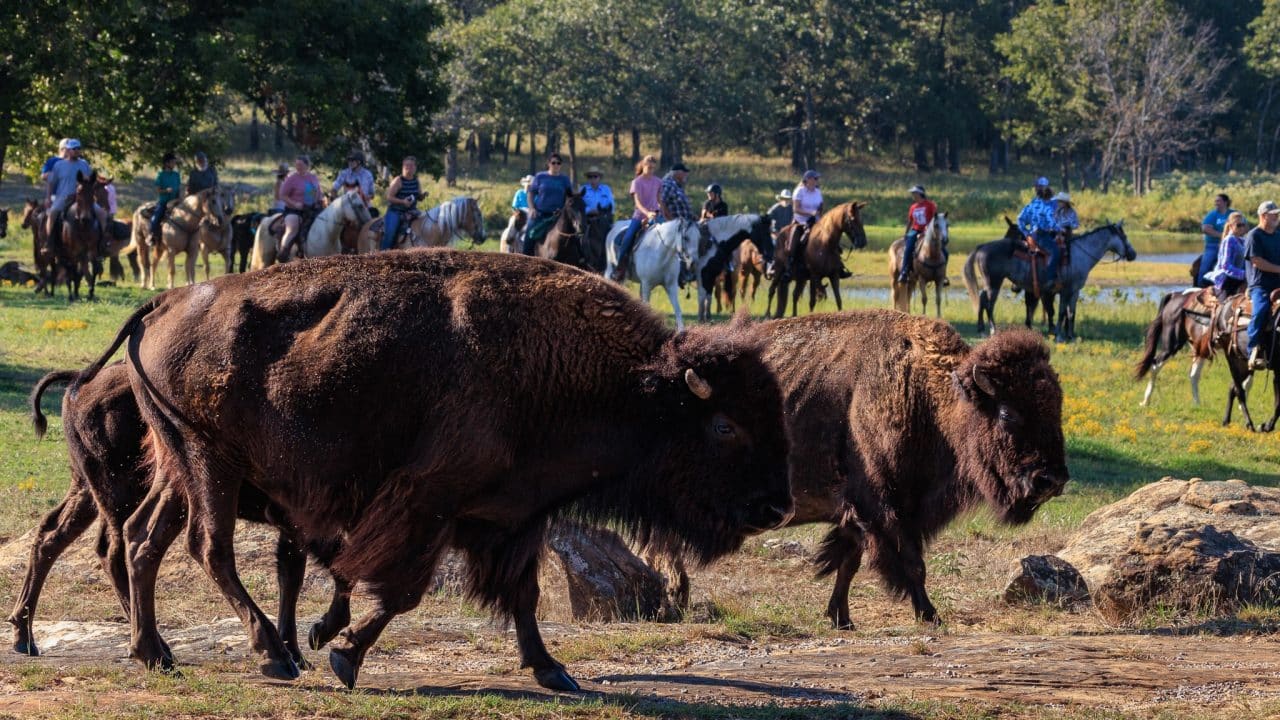
While the names are often used interchangeably, buffalo and bison are not the same species. Buffalo are native to Africa and Asia, while bison are native to North America and Europe. There are several key differences:
- Hump: Bison have a large shoulder hump used for plowing snow and lifting their heads in deep drifts. Buffalo do not have this hump.
- Fur: Bison have thick, shaggy coats, particularly around the head and neck, which help them survive cold winters. Buffalo have shorter, sleeker hair.
- Horns: Bison have short, curved horns, while buffalo have longer, sweeping horns.
- Habitat: American bison roam grasslands and prairies. Water buffalo and Cape buffalo prefer wetlands and savannahs.
So why the confusion? When early European settlers arrived in North America, they called the large grazing animals they saw “buffalo,” likely because they resembled the African species. The name stuck, and it continues to be used today—even though it’s technically inaccurate.
Why the Bison Is So Important to Oklahoma
Bison are woven into the identity of the Great Plains. Once numbering over 30 million, they were nearly hunted to extinction in the 19th century. Conservation efforts brought them back, and today they are recognized not only as the national mammal of the United States but also as the official state mammal of Oklahoma.
Bison are a keystone species that shape the ecosystem around them. Their grazing patterns promote healthy prairie growth and create habitat for birds, insects, and other wildlife.
At Woolaroc, these animals are more than part of the landscape—they’re part of the mission. Our 3,700-acre wildlife preserve gives bison and other animals the freedom to roam in a natural and protected environment.
Where to See Bison in Oklahoma
If you want to see bison up close in Oklahoma, Woolaroc is one of the best destinations. Located just outside Bartlesville, our preserve is home to a thriving herd of American bison, elk, longhorn cattle, and other species.
Visitors can observe bison from the comfort of their vehicles on the scenic drive through the preserve. Along the way, you may also spot deer, ostriches, water buffalo, and more. Our museum and historic lodge also offer insight into the history of wildlife in the region and the conservation efforts that keep these species protected.
For younger guests and animal lovers, our barn inside with animals provides an interactive experience with goats, chickens, miniature donkeys, and more.
Plan Your Visit to Woolaroc
To get the best experience, plan your trip during cooler parts of the day, such as early morning or late afternoon, when bison tend to be more active. Be sure to bring a camera or binoculars to appreciate their size and majesty. For larger parties or schools, we offer guided group tours that include wildlife viewing and educational stops across the property.
Before you arrive, explore our Plan Your Visit page for hours, admission prices, and tips on what to expect.
Don’t miss your chance to see one of America’s most iconic animals in their natural environment.
Plan your visit now
Book a guided tour for your group
Explore the barn inside with animals

Leave a Reply